

FAQ
PSSD Explainer video
Questions and answers
Post-SSRI Sexual Dysfunction (PSSD) is a condition where sexual and cognitive side effects caused by antidepressants (especially SSRIs and SNRIs) persist long after, or begin after stopping the medication. For some, PSSD symptoms appear right away and never resolve; for others, symptoms only emerge after reducing or discontinuing the medication. [1]
Although most cases are linked to SSRIs and SNRIs, similar problems have been reported after other serotonin-affecting drugs, including certain tricyclic antidepressants, antipsychotics, antihistamines, antibiotics such as doxycycline, and analgesics such as tramadol.
The medical term, 'PSSD', does not accurately highlight the debilitating cognitive and emotional impairment that many people with this condition also suffer from. [1]
| SSRIs | SNRIs |
|---|---|
| Citalopram (Celexa) | Venlafaxine (Effexor) |
| Escitalopram (Lexapro) | Des-venlafaxine (Pristiq) |
| Fluoxetine (Prozac) | Duloxetine (Cymbalta) |
| Fluvoxamine (Luvox) | Atomoxetine (Strattera) |
| Paroxetine (Paxil) | Levo-milnacipran (Fetzima) |
| Sertraline (Zoloft) | Vortioxetine (Trintellix) |
Anecdotally, PSSD has also been reported to occur with certain antipsychotics and tricyclic antidepressants.
It is common to develop side effects while taking one of these medications, however, it is not currently known what proportion of people do not recover fully when they stop taking them. For some people with PSSD, symptoms only appear when they stop taking the medication or begin to reduce the dose.
PSSD is often confused with other conditions due to the lack of awareness among healthcare professionals. Some individuals may also mistaken their PSSD symptoms to other factors such as Asexuality, especially when SSRIs were taken as a child. Reduced libido can be associated with depression, anxiety, and other mental health conditions, however PSSD is a physiological consequence of prior medication use and usually carries more symptoms. PSSD is not Depression, Functional Neurological Disorder, Health anxiety/OCD, Menopause, Pre-existing Sexual Dysfunction, or anything Psychosomatic.
| Sexual symptoms | Other symptoms |
|---|---|
| Numb genitals | Anhedonia – inability to feel emotions (e.g. fear, euphoria, love) |
| Loss of libido | Cognitive impairment (memory, thinking) |
| Pleasureless orgasms | Other sensory disturbances (smell, taste, vision) |
| Inability to orgasm (anorgasmia) | Depersonalisation |
| Reduced ability to become sexually aroused | Skin numbness |
| Vaginal dryness | Changes in menstrual cycle |
| Erectile dysfunction | |
| Loss of nocturnal erections | |
| Decreased seminal volume and/or quality | |
| Decreased penile or testicular size |
This list cannot fully convey the distressing nature of living with PSSD. Patients describe the loss of emotion as completely removing color from their lives as if someone had turned off a switch – they find themselves in a world without love, passion, excitement, or awe. The loss of emotion and cognitive symptoms create difficulties with navigating the world of work, study, relationships, and other social situations and can leave people with PSSD feeling extremely isolated and in need of support from those around them.
PSSD is a poorly understood condition for which there are currently no reliable estimates of its prevalence or incidence. Due to a lack of large-scale, well-controlled studies, it is unclear how many individuals worldwide suffer from PSSD, or what fraction of SRI users develop PSSD after stopping the drug. Additionally, the condition is likely underreported [5] [22] due to various factors, such as misdiagnosis, lack of recognition by medical practitioners, and social stigma surrounding sexual dysfunction.
However, data released in 2021 by the Medicines and Healthcare Products Regulatory Agency under the UK's Freedom of Information Act shed some light on the issue. The data showed that among 1654 cases of sexual dysfunction from SSRIs, 225 cases continued after withdrawal with the recovery time being unknown, and 144 cases continued after withdrawal with the recovery time being known. These numbers suggest that a significant number of patients may experience persistent sexual dysfunction after stopping SSRIs. [8]
A 2020 retrospective review published in The Journal of Urology reported that 4% of the male patients whose charts were assessed in the review (43 patients total) met the criteria for PSSD. These patients had displayed sexual dysfunction symptoms for longer than 6 months after stopping an SSRI between 2009 and 2019. [6] While this is a small sample size, it suggests that PSSD is a real phenomenon that warrants further investigation.
Lastly, A retrospective analysis conducted in 2023 examined patient records spanning 19 years at Clalit Health Services, the largest HMO in Israel. The analysis revealed that 1 in 216 of the surveyed men who had received serotonergic antidepressant treatment exhibited symptoms consistent with Post-SSRI Sexual Dysfunction (PSSD). This is likely a conservative estimate as the study only counted men (women were not included in the study) who actively sought treatment for PSSD, excluding many sufferers who did not seek medical help This suggests that the risk of PSSD is higher than stated here. [34]
A cross-sectional survey titled “Frequency of self-reported persistent post-treatment genital hypoesthesia among past antidepressant users” reported a marked difference in outcomes between groups. Among former antidepressant users, 13.2% reported persistent reductions in genital sensitivity, compared with only 0.9% of individuals who had used other types of medication. [35]
The lack of recognition and awareness of PSSD among medical professionals can compound the challenges that patients face. Many individuals with PSSD have reported difficulties in finding support and validation for their condition. In many cases, medical practitioners are not knowledgeable about PSSD, and patients have not been listened to or have received unsympathetic or inappropriate responses. Additionally, some medical professionals have been reluctant to engage with the published medical literature on PSSD. These challenges can make it harder for individuals with PSSD to get the help and support they need. [9]
Patient communities
There are a lot of communities where patients with PSSD seek help and support.
While this is not scientific evidence, it does give a rough idea of how many people are suffering from this condition. The PSSD subreddit is seeing continuous exponential growth due to increased awareness and recognition.
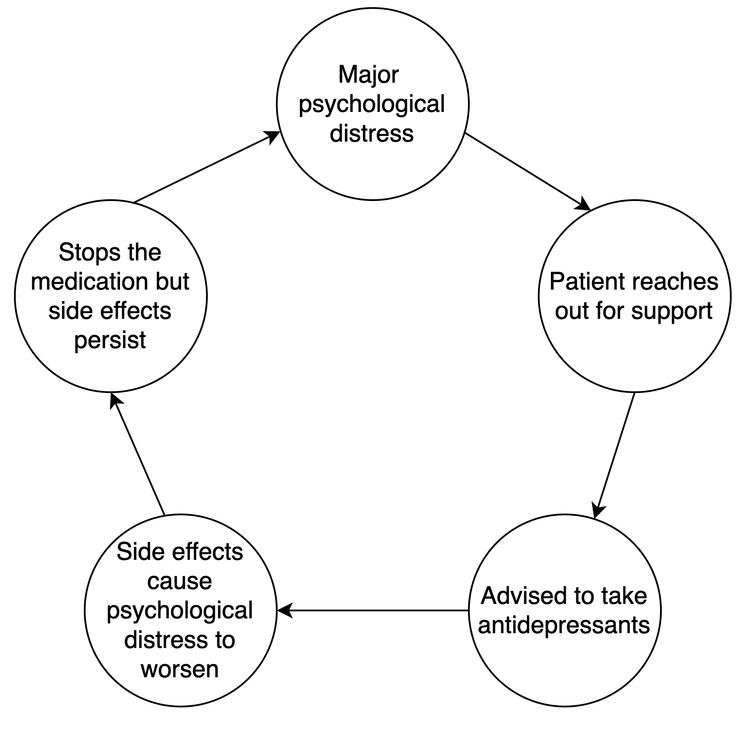
The study Post-SSRI sexual dysfunction: barriers to quantifying incidence and prevalence reflects the importance of recognizing how skepticism of this condition perpetuates a cycle where nothing gets done. Patients who report PSSD are frequently dismissed, with their symptoms attributed to psychological factors, leading to underreporting and a lack of medical documentation. This, in turn, creates significant barriers to research, as studies struggle with small sample sizes, selection bias, and inconsistent methodologies; further fueling doubt about the condition's legitimacy. Many patients, feeling invalidated and embarrassed by the deeply personal nature of their symptoms, hesitate to speak out, further reducing awareness and available data. The resulting lack of education on PSSD within the medical community leaves professionals unaware of its existence, limiting both research funding and treatment development. As long as this cycle continues, the medical field remains stuck in a state of inaction, reinforcing its own skepticism, and ensuring that evidence remains scarce.
It is important to note that PSSD is not limited to individuals who currently struggle or have struggled with mental illness. There have been numerous reports of SSRI/SNRI-induced PSSD in patients who took the medication for other reasons, such as PMS [10], pain [11] or IBS [12].
Publications and studies
We've compiled an extensive collection of research papers, articles, and FOI requests on PSSD. You can access the list here.
Reported cases
PSSD was first formally recognized in the medical literature back in 2006, [7] however, reports of persistent sexual dysfunction post SSRI usage date back as far as the 90s. [2]
Dr. David Healy has confirmed that there are over 1000 validated reports of PSSD which have been reported to RxISK with many others that are yet to be completed or do not meet strict criteria.
In a study published by Dr. Healy et al., 300 cases of PSSD, PFS (Post-Finasteride Syndrome), and PRSD (Post-Retinoid Sexual Dysfunction) were fully evaluated. Reports came from more than 37 different countries of people of all ages, sexes, and ethnic groups. [13]
Data released (on 28 May 2021) under Freedom of Information laws by the Medicines and Healthcare Products Regulatory Agency shows that 360 (216 + 144) of 1654 reports of sexual dysfunction associated with SSRI use continued after stopping the drugs. [8]
Notable studies
Montejo et al. carried out a study in which patients that were experiencing sexual side effects, switched from an SSRI to a dopaminergic antidepressant, namely amineptine. 55% of these patients were still experiencing some form of sexual dysfunction 6 months after switching to amineptine. Compared to the control group, who were treated with amineptine alone, this was only 4%. [14]
Three large placebo-controlled studies have found that the ejaculation-delaying effects of SSRI medication persist for a significant number of participants after discontinuing the medication. [15] [16] [17]
An online survey of 610 young adults (66% women) assessed childhood and current mental health and use of antidepressants and other psychiatric medications before the age of 16 years and currently, partnered and solitary sexual desire, and frequency of masturbation and partnered sexual activity. The results concluded that: [18]
"For women, childhood SSRI use was associated with significantly lower solitary sexual desire, desire for an attractive other, and frequency of masturbation. This was true even when controlling for childhood mental health concerns, current mental health, and current antidepressant use."
"In men, childhood use of non-SSRI antidepressants was associated with significantly higher frequency of partnered sexual activity."
Animal studies
Treatment with fluoxetine has been shown to cause persistent desensitization of 5-HT1A receptors after the removal of the SSRI in rats. Rodent studies have shown that treatment with SSRIs at a young age results in permanently decreased sexual behavior in adulthood, including the presence of long-term neurological changes. Maternal exposure to fluoxetine was also found to impair sexual motivation in adult male mice. In 2016, Simonsen et al published a systematic review of 14 animal studies measuring sexual behavior after discontinuation of treatment with SSRIs. It concluded:
"Our results showed substantial and lasting effects on sexual behaviour in rats after exposure to an SSRI early in life on important sexual outcomes."
Controlled Vocabularies
SNOMED CT (Systematized Nomenclature of Medicine Clinical Terms), a worldwide health records database, includes a diagnostic entry for Persistent Sexual Dysfunction Following the Withdrawal of SSRIs (code: 1340196008). This allows doctors to add a formal PSSD diagnosis to patients' medical records.
Orphanet, a European-based database and resource portal dedicated to rare diseases, has a designated code for PSSD.
MedDRA (Medical Dictionary for Regulatory Activities), a standardized medical terminology used globally to classify and code adverse events, diseases, and medical product information, has a code for PSSD (10086208). This code can be used by patients when filing adverse reaction reports in their own country.
Authoritative References
The Maudsley Deprescribing Guidelines (2024 edition) mentions PSSD on pages 98 and 155.
Oxford Academic's Journal of Sexual Medicine, a peer-reviewed medical journal published on behalf of the International Society for Sexual Medicine (ISSM), has acknowledged PSSD.
The Diagnostic and Statistical Manual of Mental Disorders (DSM) contains a section on substance/medication-induced sexual dysfunction. Page 449 states:
"In some cases, serotonin reuptake inhibitor-induced sexual dysfunction may persist after the agent is discontinued."
Health & Medicines Agencies
Australia's Therapeutic Goods Administration (TGA), Australia's medical regulatory authority, issued a safety update on May 23rd, 2024, advising that all SSRIs and SNRIs are to include warnings about persistent sexual dysfunction after stopping the medication. The TGA stated that sexual dysfunction "can persist for weeks to years and can significantly harm patients' quality of life" and that "persistent sexual dysfunction after treatment is stopped is thought to be rare. However, these symptoms are likely to be underreported and their prevalence is not currently known." TGA Statement on PSSD.
The European Medicines Agency (EMA), the EU's medical regulatory authority, recommended that drug manufacturers update the labels of all SSRIs/SNRIs to include that sexual dysfunction can be long-lasting in some patients, even after treatment withdrawal. EMA concluded:
"PRAC concluded that sexual dysfunction, which is known to occur with treatment with SSRIs and SNRIs and usually resolves after treatment has stopped, can be long-lasting in some patients, even after treatment withdrawal."
Health Canada recommends that all healthcare professionals inform patients about the risk of PSSD. On 6 January 2021, a summary of their post-review findings stated:
"Health Canada will work with manufacturers to update the product safety information for all SSRIs and SNRIs to recommend that healthcare professionals inform patients about the potential risk of long lasting (possibly weeks to years) sexual dysfunction despite discontinuation of SSRIs or SNRIs."
The Hong Kong Department of Health released a warning about PSSD to local healthcare professionals in 2021. [19]
The NHS has published a statement regarding PSSD for Sertraline (Zoloft): [20]
Long-term side effects – A few people may get sexual side effects, such as problems getting an erection or a lower sex drive. In some cases these can continue even after stopping the medicine. Speak to your doctor if you are worried.
Learned Societies
The Royal College of Psychiatrists (RCPsych) now mentions PSSD on its antidepressant guidance page, under the “Do antidepressants have side effects?” tab.
Medication Labels
The following SSRI medications have been issued with informational leaflets and/or labels containing warnings about post-discontinuation sexual side effects:
At this stage it is understandable that you may be starting to worry more about your situation. This is normal, you are not alone, and there are resources available to help.
We encourage patients at this stage to focus on:
-
Not panicking. For many people within the first 1–2 years, improvement can and does occur. For those who don't experience recovery in that timeframe, it does not mean it's impossible. The course of this condition is highly individual, and research is ongoing.
-
Practicing self-care. Self-care varies by patient, so try to find routines and activities that help you personally. Try to set realistic expectations for work, school, and social life while you adjust. Give yourself permission to simplify commitments and conserve energy where you can. Focus on what you can manage right now, rather than pushing yourself beyond your limits.
-
Connecting with others. Consider joining our support group or using the subreddit. With this condition, it's common to feel isolated, but there are many people online who understand exactly what you're going through. Staying connected can provide encouragement, practical tips, and a reminder that you are not alone. Try not to withdraw completely – community support can be an important part of coping.
-
Engaging intelligently with the issue. Our website contains many resources to help you understand the current state of scientific literature, and to navigate conversations about PSSD.
-
Contributing to community progress where possible. Get in touch if you are interested in finding ways to help. Every effort counts! We would not be where we are today if not for help from community members.
Some patients have exhibited an unusual and marked sensitivity to substances with anti-androgenic effects, as well as substances that drastically affect serotonin levels. Substances such as psilocybin, marijuana, 5-HTP, and other antidepressants have in some cases made patients their condition permanently worse in attempts at alleviating their existing symptoms. [3]
Atypical antidepressants such as Bupropion (sold under the brand name Wellbutrin) and Buspirone (sold under the brand name Buspar) are often prescribed as a way to counteract the sexual symptoms of antidepressants.
Unfortunately, in regard to PSSD, the efficacy of these antidepressants is very hit or miss. There have been reports of people developing PSSD from atypical antidepressants, and others have reported that their condition was permanently worsened after taking them. Always consult your doctor before making any changes to your medication.
Be cautious with experimentation. We strongly advise against self-experimentation, but if someone does consider it, they must first educate themselves thoroughly. It is understandable to feel desperate and want to try supplements or other self-prescribed treatments, however, experimenting in this way carries serious risks and should never be taken lightly. What may seem to help one person can be ineffective, or even harmful, for another.
There's no proven or reliable way to make recovery happen on your own, but many people do improve over time. Why some recover and others don't, or how long it takes, is still unknown. Do not lose hope, as there are patients who are known to have recovered with time.
It is uncertain how medication can cause PSSD and why the condition can last so long after discontinuing. Nevertheless, a number of studies have produced possibly pertinent results that could indicate a mechanism for PSSD. The development of PSSD may be brought on by a number of different factors.
Potential role of epigenetic changes in 5-HT1A receptor expression
According to a literature study from 2017: [5]
"Long-term usage of SSRIs is hypothesized to cause persistent downregulation of 5HT1A (even after discontinuation of SSRIs) by epigenetic changes in the form of increased expression of methyl binding proteins MeCP2 and MBD1. This leads to more production of HDAC2 mRNA and lowers the production of histone H3 deacetylase."
The 5-HT1A receptor is involved in a number of neurological processes, including the control of erectile function and sexual arousal.
Potential endocrine disruption by SSRIs
The six most widely used SSRIs (fluoxetine, paroxetine, escitalopram, citalopram, sertraline, and fluvoxamine) were found to disrupt steroid synthesis in cultured H295R (human adrenocortical carcinoma) cells; all six drugs were found to decrease androgen production and produce a compensatory increase in estrogen production, with stimulation of CYP19 aromatase apparently being a common factor. [23] According to a review of studies on the endocrine disruption caused by SSRIs published in 2021, the majority of SSRIs have shown the potential to affect patients' levels of testosterone and estrogen. [24]
In rats, paroxetine has been shown to affect the expression of enzymes involved in the production of neuroactive steroids, with a reduction in enzyme expression being observed upon cessation of treatment. [25]
Potential role of persistent electrophysiological changes
According to a 2020 study, planarians (flatworms) exposed to fluoxetine over a three-day period experienced changes in their cells' resting potential that persisted for at least a week after the drug was stopped. [26] The authors hypothesized that the sometimes-permanent effects seen following SSRI treatment may be due to persistent effects of this kind in human neurons. [26]
Potential correlation with small fiber neuropathy
In September 2022, a subset of 36 Finnish individuals who were diagnosed with PSSD underwent testing for small fiber neuropathy (SFN) through a skin biopsy. The results of the test showed that all of the tested individuals had an unusually low density of intra-epidermal nerve fibers (IENF), which is indicative of SFN. [32] Even though SFN is usually accompanied by painful burning sensations, which are not a common symptom of PSSD, there are instances where SFN can exist without pain, manifesting only as autonomic dysfunction. [33]
Potential role of ACE2
According to preliminary research findings submitted to RxISK in December 2022 by Luisa Guerrini of the University of Milan, sertraline (Zoloft) treatment of human cells caused a persistent downregulation in the expression of the proteins p63 and ACE2. [28] Finasteride and isotretinoin (Accutane), two non-SSRI medications that are known to cause post-discontinuation syndromes resembling PSSD, showed similar outcomes. While ACE2 in its soluble (non-membrane-bound) form (sACE2) acts to degrade the vasoconstriction-inducing hormone angiotensin II to angiotensin, p63's main function is to regulate the replication and differentiation of epidermal skin cells (1-7).
In particular, the intronic ACE2 mutation G8790A was associated with significantly better response to SSRI treatment, according to a study published in 2021. This suggests that genetic variation within the ACE2 gene may determine the degree to which depressed patients respond favorably to treatment with SSRIs. [29]
It is worth mentioning that the membrane-bound form of ACE2 (mACE2) is also the receptor protein that SARS-CoV-2 uses as an entry point into the cell, and binding of the SARS-CoV-2 spike protein to ACE2 has been suggested to stimulate an inflammatory response that could cause 'long COVID', a post-infection syndrome exhibiting multiple symptoms that overlap with PSSD.
ACE2 is highly expressed in the epithelium of the intestines, where it plays a role in maintaining innate immunity and homeostasis of gut microbial communities. [30] Treatment with SSRIs [31] have been demonstrated to cause changes in gut microbiota populations.
Donate to help further ongoing research
There currently are two fundraisers for PSSD research, check out the donation page to learn more.
It's unknown if the length of time a person has been taking an SRI affects how likely they are to get PSSD. There have been instances of cases arising after only a few, or even one dose, of an SRI. [5]
Experiencing these symptoms while on the medication is unfortunate, however it is normal to experience this while still taking antidepressants. If you choose to stop your medication, please find professional assistance before tapering. It is not PSSD unless you are off the medication for at least 3 months and do not see any improvements within your symptoms. [5]
New patients are understandably desperate for relief. As a result, it's common to look for simplistic explanations or quick fixes. Unfortunately, currently, there is no effective treatment for PSSD.
There are several anecdotal self-reports that claim that different strategies, such as pharmaceutical or psychiatric therapies, dietary adjustments, or lifestyle modifications, are associated with improvements in PSSD symptoms, but these findings have not been objectively validated or repeated. We highly discourage against self-experimentation with any medications, supplements, etc... due to the potential risk of causing worsening of your existing symptoms.
Some studies have been carried out in an effort to find effective PSSD treatments [21] [22], but generally speaking, they suffer from a limited sample size and a lack of controls, limiting their usefulness as informational sources.
It is impossible to predict when there might be a treatment for PSSD at this time. Our challenges at the moment are to better understand the mechanisms underlying the syndrome and who is affected and why.
Research that may lead to a better understanding of the potential mechanisms underlying PSSD is taking place and more will be known about this condition over the next few years.
Report your condition to regulators
Visit our 'Report Your Symptoms' page to find our list of regulators to report to!
Join our fundraising group
This is a friendly and informal group of patients and family members who donate monthly to the PSSD research fund. Members are encouraged to share screenshots of their donations in the group and on platforms like Reddit & X to help encourage others to join in! We also hold “$8 on the 8th” fundraiser drives to help boost donations. Fill out the form on this page to request to join our Whatsapp group.
Donate to the cause!
Join the many PSSD patients who have collectively raised hundreds of thousands of dollars to overcome PSSD! Your donations will go directly to the groundbreaking PSSD research conducted by Prof. Melcangi (University of Milan, Italy), Prof. Csoka (Howard University, Washington D.C), & Prof. Monks (University of Toronto, Canada).
Participate in our community efforts
We need to show the world that ordinary people are being affected by PSSD. Please consider participating in any of our community efforts:
- Photo campaign (can be done anonymously)
- Patient story video campaign
- Paper video campaign (can be done anonymously)
Raise awareness
We need to make it impossible for PSSD to be ignored any longer. Write to your government representative and ask them to support calls for research funding and better information for doctors and patients, write to the media to make them aware of the existence of PSSD and the impact that it is having on lives, write to your healthcare provider to ask why you were not warned about such long-term and debilitating effects before you took the medication. If you want to volunteer and raise awareness together, please get in touch with us and we'll be in touch with you!
References
-
Healy, D., Bahrick, A., Bak, M., Barbato, A., Calabrò, R. S., Chubak, B. M., Cosci, F., Csoka, A. B., D'Avanzo, B., Diviccaro, S., Giatti, S., Goldstein, I., Graf, H., Hellstrom, W. J. G., Irwig, M. S., Jannini, E. A., Janssen, P. K. C., Khera, M., Kumar, M. T., Le Noury, J., … Waraich, A. (2022). Diagnostic criteria for enduring sexual dysfunction after treatment with antidepressants, finasteride and isotretinoin. The International journal of risk & safety in medicine, 33(1), 65–76. https://doi.org/10.3233/JRS-210023
-
Healy D. (2018). Citizen petition: Sexual side effects of SSRIs and SNRIs. The International journal of risk & safety in medicine, 29(3-4), 135–147. https://doi.org/10.3233/JRS-180745
-
Peleg, L. C., Rabinovitch, D., Lavie, Y., Rabbie, D. M., Horowitz, I., Fruchter, E., & Gruenwald, I. (2022). Post-SSRI Sexual Dysfunction (PSSD): Biological Plausibility, Symptoms, Diagnosis, and Presumed Risk Factors. Sexual medicine reviews, 10(1), 91–98. https://doi.org/10.1016/j.sxmr.2021.07.001
-
Reisman Y. (2020). Post-SSRI sexual dysfunction. BMJ (Clinical research ed.), 368, m754. https://doi.org/10.1136/bmj.m754
-
Bala, A., Nguyen, H. M. T., & Hellstrom, W. J. G. (2018). Post-SSRI Sexual Dysfunction: A Literature Review. Sexual medicine reviews, 6(1), 29–34. https://doi.org/10.1016/j.sxmr.2017.07.002
-
Waraich, Ahad & Clemons, Channing & Ramirez, Roma & Yih, Jessica & Goldstein, Sue & Goldstein, Irwin. (2020). MP78-15 POST-SSRI SEXUAL DYSFUNCTION (PSSD): TEN YEAR RETROSPECTIVE CHART REVIEW. The Journal of Urology. 203. e1179. https://www.auajournals.org/doi/10.1097/JU.0000000000000964.015
-
Csoka, A. B., & Shipko, S. (2006). Persistent sexual side effects after SSRI discontinuation. Psychotherapy and psychosomatics, 75(3), 187–188. https://doi.org/10.1159/000091777
-
Medicines and Healthcare products Regulatory Agency. (2021, May 26). Freedom of Information request on adverse sexual dysfunction reactions to SSRI use (FOI 21-232). GOV.UK. https://www.gov.uk/government/publications/freedom-of-information-responses-from-the-mhra-week-commencing-5-april-2021/freedom-of-information-request-on-adverse-sexual-dysfunction-reactions-to-ssri-use-foi-21-232
-
Healy, D., Le Noury, J., & Mangin, D. (2019). Post-SSRI sexual dysfunction: Patient experiences of engagement with healthcare professionals. The International journal of risk & safety in medicine, 30(3), 167–178. https://doi.org/10.3233/JRS-191005
-
Marjoribanks, J., Brown, J., O'Brien, P. M., & Wyatt, K. (2013). Selective serotonin reuptake inhibitors for premenstrual syndrome. The Cochrane database of systematic reviews, 2013(6), CD001396. https://doi.org/10.1002/14651858.CD001396.pub3
-
Patetsos, E., & Horjales-Araujo, E. (2016). Treating Chronic Pain with SSRIs: What Do We Know?. Pain research & management, 2016, 2020915. https://doi.org/10.1155/2016/2020915
-
Kułak-Bejda, A., Bejda, G., & Waszkiewicz, N. (2017). Antidepressants for irritable bowel syndrome-A systematic review. Pharmacological reports : PR, 69(6), 1366–1379. https://doi.org/10.1016/j.pharep.2017.05.014
-
Healy, D., Le Noury, J., & Mangin, D. (2018). Enduring sexual dysfunction after treatment with antidepressants, 5α-reductase inhibitors and isotretinoin: 300 cases. The International journal of risk & safety in medicine, 29(3-4), 125–134. https://doi.org/10.3233/JRS-180744
-
Montejo, A. L., Llorca, G., Izquierdo, J. A., Carrasco, J. L., Daniel, E., Pérez-Sola, V., Vicens, E., Bousoño, M., Sánchez-Iglesias, S., Franco, M., Cabezudo, A., Rubio, V., Ortega, M. A., Puigdellivol, M., Domenech, J. R., Allué, B., Sáez, C., Mezquita, B., Gálvez, I., Pacheco, L., … de Miguel E (1999). Disfunción sexual con antidepresivos. Efecto del cambio a amineptino en pacientes con disfunción sexual secundaria a ISRS [Sexual dysfunction with antidepressive agents. Effect of the change to amineptine in patients with sexual dysfunction secondary to SSRI]. Actas espanolas de psiquiatria, 27(1), 23–34.
-
Safarinejad, M. R., & Hosseini, S. Y. (2006). Safety and efficacy of citalopram in the treatment of premature ejaculation: a double-blind placebo-controlled, fixed dose, randomized study. International journal of impotence research, 18(2), 164–169. https://doi.org/10.1038/sj.ijir.3901384
-
Arafa, M., & Shamloul, R. (2006). Efficacy of sertraline hydrochloride in treatment of premature ejaculation: a placebo-controlled study using a validated questionnaire. International journal of impotence research, 18(6), 534–538. https://doi.org/10.1038/sj.ijir.3901469
-
Safarinejad M. R. (2007). Safety and efficacy of escitalopram in the treatment of premature ejaculation: a double-blind, placebo-controlled, fixed-dose, randomized study. Journal of clinical psychopharmacology, 27(5), 444–450. https://doi.org/10.1097/jcp.0b013e31814b98d4 (Retraction published J Clin Psychopharmacol. 2022 Mar-Apr 01;42(2):230)
-
Lorenz T. K. (2020). Antidepressant Use During Development May Impair Women's Sexual Desire in Adulthood. The journal of sexual medicine, 17(3), 470–476. https://doi.org/10.1016/j.jsxm.2019.12.012
-
HongKong Warning. 7 January 2021. Archived from the original on 12 December 2022. https://web.archive.org/web/20221213074708/https://www.drugoffice.gov.hk/eps/news/showNews/newsTitle/healthcare_providers/2021-01-07/en/42770.html
-
NHS website. (2022b, February 14). Side effects of sertraline. nhs.uk. https://www.nhs.uk/medicines/sertraline/side-effects-of-sertraline
-
Yacov Reisman, Tommaso B. Jannini, Emmanuele A. Jannini. Post-Selective Serotonin Reuptake Inhibitor Sexual Dysfunctions (PSSD): Clinical Experience with a Multimodal Approach. J. Mens. Health 2022, 18(8), 165. https://doi.org/10.31083/j.jomh1808165
-
De Luca, R., Bonanno, M., Manuli, A., & Calabrò, R. S. (2022). Cutting the First Turf to Heal Post-SSRI Sexual Dysfunction: A Male Retrospective Cohort Study. Medicines (Basel, Switzerland), 9(9), 45. https://doi.org/10.3390/medicines9090045
-
Hansen, C. H., Larsen, L. W., Sørensen, A. M., Halling-Sørensen, B., & Styrishave, B. (2017). The six most widely used selective serotonin reuptake inhibitors decrease androgens and increase estrogens in the H295R cell line. Toxicology in vitro : an international journal published in association with BIBRA, 41, 1–11. https://doi.org/10.1016/j.tiv.2017.02.001
-
Pavlidi, P., Kokras, N., & Dalla, C. (2021). Antidepressants' effects on testosterone and estrogens: What do we know?. European journal of pharmacology, 899, 173998. https://doi.org/10.1016/j.ejphar.2021.173998
-
Giatti, S., Diviccaro, S., Cioffi, L., Falvo, E., Caruso, D., & Melcangi, R. C. (2021). Effects of paroxetine treatment and its withdrawal on neurosteroidogenesis. Psychoneuroendocrinology, 132, 105364. https://doi.org/10.1016/j.psyneuen.2021.105364
-
Healy, D., LaPalme, J., & Levin, M. (2020). Post-SSRI Sexual Dysfunction: A Bioelectric Mechanism?. Bioelectricity, 2(1), 7–13. https://doi.org/10.1089/bioe.2019.0010
-
Healy, D. (2022, October 10). Sensory Receptors, Small Fibres and Neuropathy. RxISK. https://rxisk.org/sensory-receptors-small-fibres-and-neuropathy/
-
Healy, D. (2022b, December 5). A Cure for PSSD, PFS and Post-Isotretinoin Syndrome. RxISK. https://rxisk.org/a-cure-for-pssd-pfs-and-post-isotretinoin-syndrome/
-
Firouzabadi, N., Farshadfar, P., Haghnegahdar, M., Alavi-Shoushtari, A., & Ghanbarinejad, V. (2022). Impact of ACE2 genetic variant on antidepressant efficacy of SSRIs. Acta neuropsychiatrica, 34(1), 30–36. https://doi.org/10.1017/neu.2021.32
-
Yu, Z., Yang, Z., Wang, Y., Zhou, F., Li, S., Li, C., Li, L., Zhang, W., & Li, X. (2021). Recent advance of ACE2 and microbiota dysfunction in COVID-19 pathogenesis. Heliyon, 7(7), e07548. https://doi.org/10.1016/j.heliyon.2021.e07548
-
Shen, Y., Yang, X., Li, G., Gao, J., & Liang, Y. (2021). The change of gut microbiota in MDD patients under SSRIs treatment. Scientific reports, 11(1), 14918. https://doi.org/10.1038/s41598-021-94481-1
-
Healy, D. (2021, Septepber 2). Sensory Receptors, Small Fibres and Neuropathy. Syndrome. RxISK. https://rxisk.org/sensory-receptors-small-fibres-and-neuropathy/
-
Levine T. D. (2018). Small Fiber Neuropathy: Disease Classification Beyond Pain and Burning. Journal of central nervous system disease, 10, 1179573518771703. https://doi.org/10.1177/1179573518771703
-
Ben-Sheetrit, J., Hermon, Y., Birkenfeld, S., Gutman, Y., Csoka, A. B., & Toren, P. (2023). Estimating the risk of irreversible post-SSRI sexual dysfunction (PSSD) due to serotonergic antidepressants. Annals of general psychiatry, 22(1), 15. https://doi.org/10.1186/s12991-023-00447-0
-
Frequency of self-reported persistent post-treatment genital hypoesthesia among past antidepressant users. Social Psychiatry and Psychiatric Epidemiology (2024). https://link.springer.com/article/10.1007/s00127-024-02769-0