

June 2026 · Mid-Year Update
A progress report on research initiatives, scientific partnerships, and everything the PSSD Network has been working on behind the scenes.

Our updates have been slower and more scattered than we'd like, and we want to change that.
We're committed to showing up more consistently from here on out. Starting now, we're moving to quarterly organizational updates; the next one will land at the end of September.

We are very pleased to officially share that The DAWN Study is soon to commence in Australia in collaboration with The Florey Institute of Neuroscience and Mental Health.

Based in Melbourne, The Florey has an international reputation for world-class brain and neurological research, with scientists working across neuropsychiatry, neuroimaging, mental health, and complex disorders of the central and peripheral nervous systems. The study will be led by the Neuroepidemiology Team, which has published works on epigenetics, genetics, and autoimmunity.
This is a major milestone for the PSSD community and represents one of the first dedicated population-based Australian research studies into the biological mechanisms driving Post-SSRI Sexual Dysfunction (PSSD).
The study will involve:
- A 1,5 hour in-person assessment at the Florey Genetics Clinic in Parkville Melbourne
- Objective assessment of skin numbness
- Questionnaires and clinical examination
- Blood and other biosample collection
Importantly, this study includes both PSSD participants and healthy matched controls. We encourage friends and family of PSSD participants to join the study as controls. Controls will be matched by age, sex, and geographic location. Recruitment will commence in the next few months.
At the phase 1 stage, recruitment is limited to Australian participants only.
$100,000 AUD has been secured for phase 1, with funding provided through matching support from The Florey's Institute's ongoing work on chemicals and human health.
Additional funding is being sought for future phases of the project.
This study would not be possible without the support of the community, donors, researchers, and everyone who has continued advocating for recognition and scientific investigation into PSSD. If you live in Australia, we strongly urge each PSSD sufferer and their friends and family to participate. Participation from both PSSD patients and healthy matched controls is absolutely critical to helping move scientific understanding of this condition forward.

Professor Melcangi's team has made significant progress over the past year, moving from identifying biological changes in the brain to studying how those changes alter actual behavior.
- Male Rat Study (Manuscript in Preparation): Building on previous findings of dopamine dysfunction in the nucleus accumbens (a core brain region for reward and motivation), the team has successfully completed in vivo experiments tracking how paroxetine treatment and withdrawal affect male sexual behavior. A scientific paper detailing these behavioral results is currently being prepared for publication.
- Female Rat Study (Manuscript in Preparation): Women are prescribed antidepressants more frequently, yet female sexual dysfunction remains heavily underrecognized. To address this, the team has established a female rat model to investigate whether similar brain alterations occur. They are finalizing the final tissue experiments right now and will begin writing this second manuscript immediately after.
- PSSD Diagnostic Markers: The team is refining techniques to isolate miRNA from rat plasma. If successful, they will partner with a specialized facility and a bioinformatician to see if these tiny molecules can serve as a much-needed diagnostic biomarker for PSSD.
- Beyond the Reward Center: Future tracking will expand past the nucleus accumbens into other regions of the limbic system, as well as examining how SSRIs impact non-neuronal cell types in the brain.
Dr. Ashley Monks is in the process of sending a researcher to Italy to work directly with Professor Melcangi and his lab. While ethics approval from the Italian government has taken longer than expected, the goal remains to have the researcher on the ground before September to study SSRI effects on behavioral and neural responses to genital stimulation in the rat paroxetine model.
In the meantime, Dr. Monks and his team completed an initial characterization of the stimulation paradigm in rats. This phase of the project has been accepted for presentation at the Society for Behavioral Neuroendocrinology (SBN) Annual Meeting, taking place July 8–11.
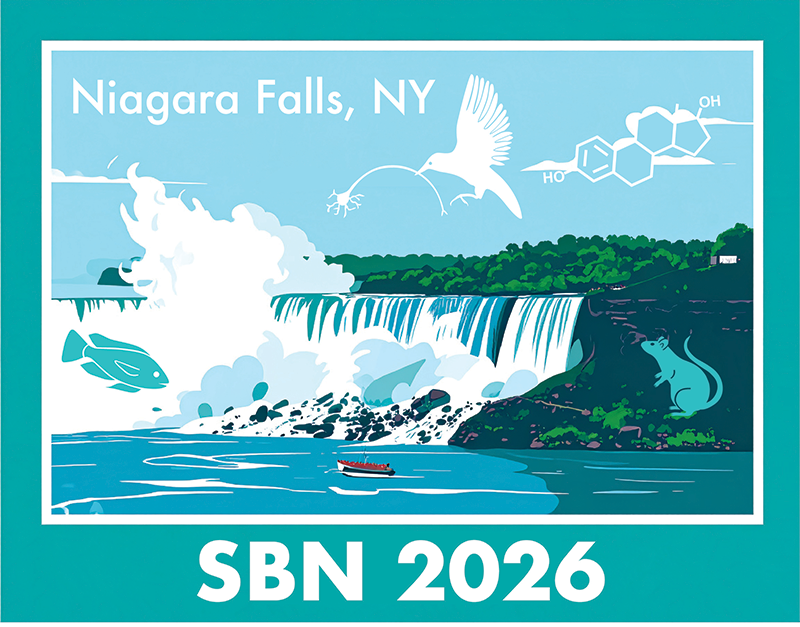
While this initial stage is a baseline study rather than a direct test of SSRIs, these findings are critical to understanding the underlying neural mechanisms of genital sensation and sexual reward, areas directly relevant to PSSD symptoms like genital numbness and reduced sexual pleasure.
Read the Conference Abstract ▾
The glans is thought to play a primary role in mediating sexually rewarding tactile copulatory sensation and contribute to sexual function of both males and females through incompletely understood mechanisms. We recently reported that although tactile genital stimulation was reinforcing to both female and male mice, associated neural responses were sexually differentiated. Here we perform a similar sex comparison in rats.
Both male and female rats were examined to characterize behavioral and neural responses to glans stimulation to identify sex-dependent patterns in reward-related behaviour and neural activation. Tactile glans stimulation was delivered in a temporally distributed pace previously shown to be rewarding to female rats for a total of 5 reinforcement sessions and 5 sham stimulation sessions on alternating days. Conditioned place preference (CPP) was used as a behavioural measure of stimulus-driven reinforcement, and neural activation to glans or sham stimulation was evaluated using FOS immunohistochemistry after the final CPP test.
Contrary to expectation, only female rats formed CPP in response to genital stimulation, whereas males did not, indicating a clear sex difference in the rewarding properties of this stimulus and suggesting additional sensory or contextual requirements for tactile glans reward in males. Ongoing FOS analysis will determine the extent to which the glans stimulation activated neural structures mediating copulation and reward processing.
This work was supported in part by the PSSD Network and a SHAPE award from the Canadian Institutes of Health Research (CIHR).
To build upon these insights, the teams are actively working on a collaborative application for funding from the Canadian government. If approved, this grant will allow them to expand the scope of these studies, including testing SSRI effects in a mouse model.
We are building a database of PSSD patients and healthy controls to support current and future research. If you have PSSD, or know someone who may qualify as a healthy matched control, we encourage you to sign up.
Collecting a well-characterised pool of participants is essential for moving research forward. The more people who register, the stronger our position when approaching research institutions and funding bodies. This is especially valuable for participants based in Australia, though we welcome sign-ups from anywhere in the world.
- PSSD patients: anyone who has experienced genital numbness persisting for 3 or more months after stopping a serotonergic antidepressant
- Non-PSSD controls: friends or family members who do not have PSSD
Everything the PSSD Network does, funding studies like DAWN, supporting Dr. Melcangi's lab, collaborating with researchers like Dr. Monks, and building the infrastructure to connect patients with science, is made possible entirely by the community.
We are in the process of registering the PSSD Network as a recognised charity in both the United Kingdom and the United States. Given the complexity of this process, we have engaged a professional service to manage both registrations on our behalf. We plan to complete both before the end of 2026.
The US registration is further along: it has already been granted tax-exempt status. This means that soon, donations to the PSSD Network will be tax-deductible for US donors, with the UK following. We will keep the community updated as things progress.
Help us shape the future of PSSD Network. We are running a short poll on our key focus areas. Tell us what matters most, what we should do more of, and where to focus next. Responses are anonymous and take about 2 minutes.
Take the Poll